BC Cargo and their Service Providers make every reasonable effort to ensure the accuracy of information on this website. If for any reason the information is not correct BC Cargo and their Service Providers are not responsible for an errors on these pages. Please verify any information in question prior to making a purchase.
BC Cargo and their Service Providers make every reasonable effort to ensure the accuracy of information on this website. If for any reason the information is not correct BC Cargo and their Service Providers are not responsible for an errors on these pages. Please verify any information in question prior to making a purchase.
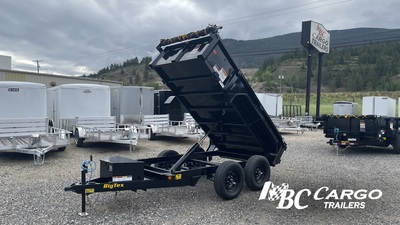
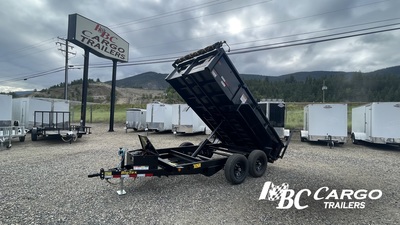
To determine the right tandem axle dump trailer, first consider the types and volumes of materials you’ll haul, then assess their weights to find the required Gross Vehicle Weight Rating (GVWR). Next, find your trailer’s own weight and calculate the available payload (GVWR minus trailer weight). Finally, select a trailer with appropriate dimensions (length and width) that fit your needs and ensure it’s compatible with your tow vehicle’s capacity.
The main types of dump trailer lift systems are Scissor Lifts, which provide high stability and are common for heavy loads, and Telescopic Lifts, which use multiple hydraulic stages for greater lift height and can handle uneven loads but may lack stability compared to a scissor lift. Dual ram systems, a variation of telescopic lifts, use two cylinders for added stability and power at a lower cost than scissor or telescopic options, making them suitable for heavy-duty commercial use.
Tandem axle dump trailers are commonly made from steel or aluminum, with the choice depending on factors like cost, desired durability, and weight. Steel trailers are generally more affordable and durable for heavy loads but are prone to rust, while aluminum trailers are lighter, more fuel-efficient, and resistant to corrosion but have a higher upfront cost.
The main difference is that a single axle dump trailer has one set of wheels, making it lighter, cheaper, and more maneuverable, while a tandem axle dump trailer has two sets of wheels for a greater load capacity, increased stability, and a smoother ride at the cost of being heavier, more expensive, and harder to turn in tight spaces. Your choice depends on your needs for load size, job site conditions, and budget.