BC Cargo and their Service Providers make every reasonable effort to ensure the accuracy of information on this website. If for any reason the information is not correct BC Cargo and their Service Providers are not responsible for an errors on these pages. Please verify any information in question prior to making a purchase.
BC Cargo and their Service Providers make every reasonable effort to ensure the accuracy of information on this website. If for any reason the information is not correct BC Cargo and their Service Providers are not responsible for an errors on these pages. Please verify any information in question prior to making a purchase.
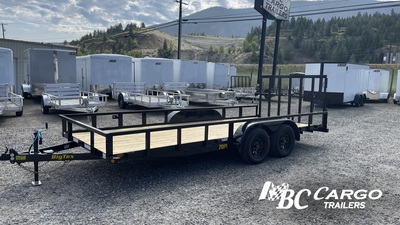
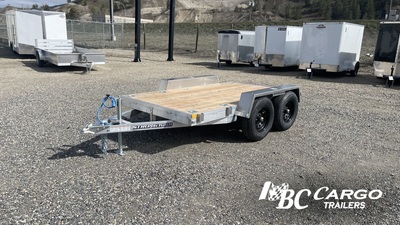
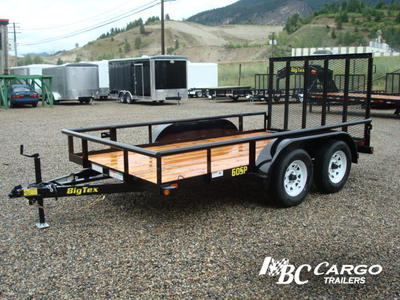
The primary differences are axle configuration, which directly impacts stability and load capacity. Tandem axle trailers have two axles and four wheels, offering greater weight distribution, higher load capacities, and better stability, making them suitable for heavy-duty use and rougher terrain. In contrast, single axle trailers have one axle and two wheels, are lighter, more maneuverable, and more affordable, making them ideal for smaller loads and lighter conditions.
This means heavier items like construction equipment or large quantities of materials can be hauled without straining one specific section of the trailer. Tandem axles handle all that weight much better compared to single-axle.
To determine the right size and weight capacity for your tandem axle utility trailer, first, find the Gross Vehicle Weight Rating (GVWR) and payload capacity from the trailer’s compliance label or by adding up your heaviest expected loads, including a safety margin. Then, consider the dimensions and volume of items you will haul, selecting a trailer with enough deck space for your heaviest or largest loads. Finally, ensure your tow vehicle’s capacity and the trailer’s capacity are compatible, checking your vehicle’s owner’s manual for its towing capabilities.
For a tandem axle utility trailer, the best suspension system depends on your needs, with leaf spring suspensions being common for durability and heavy loads, torsion axles offering independent wheel movement and a smoother ride, and air suspensions providing superior ride comfort and adjustability. Leaf spring suspensions are a dependable, cost-effective choice for heavy hauling, while torsion axles provide better ride quality by allowing each wheel to absorb bumps independently. Air suspensions, though more expensive, offer the most comfortable ride and can be adjusted for different loads.
You generally need brakes on a tandem axle utility trailer if its total weight (trailer + load) exceeds a legally specified threshold, often around 1,300 to 1,500 kg (2,900 to 3,300 lbs), and when it’s more than half the towing vehicle’s weight. Local regulations vary, so checking your province or state’s laws is crucial, but even if not legally required, brakes are highly recommended for safety due to increased stopping distance and stress on the tow vehicle’s brakes.