BC Cargo and their Service Providers make every reasonable effort to ensure the accuracy of information on this website. If for any reason the information is not correct BC Cargo and their Service Providers are not responsible for an errors on these pages. Please verify any information in question prior to making a purchase.
BC Cargo and their Service Providers make every reasonable effort to ensure the accuracy of information on this website. If for any reason the information is not correct BC Cargo and their Service Providers are not responsible for an errors on these pages. Please verify any information in question prior to making a purchase.
Hydraulic lift systems differ primarily in the type and placement of their hydraulic cylinders and overall configuration. Key differences include holed vs. holeless systems based on cylinder installation underground or not, and the platform mechanism (like scissor lifts) versus direct-lift systems that rely on pistons extending directly upwards. The application, travel height, and available space for installation dictate the best system for a given need, with variations for elevators, vehicle lifts, and industrial lifts.
GVWR stands for Gross Vehicle Weight Rating, and is the maximum total combined weight of the vehicle, including passengers, cargo, fuel, tongue weight (if towing) and all other items. GCWR stands for Gross Combined Vehicle Weight Rating. This is the maximum total combined weight of both the vehicle and trailer.
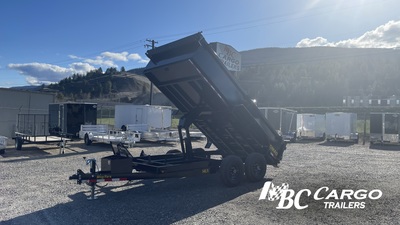
The main types of dump trailers are End Dumps, which tip from the rear, Side Dumps, which unload from the side, and Belly Dumps (or Bottom Dumps), which have a door in the bottom to release material precisely. Other types include Live Bottom Trailers, which use a conveyor belt for controlled unloading, and various Gooseneck designs for increased capacity and heavy-duty use.
The “best” material for a dump trailer is aluminum, due to its superior resistance to rust and corrosion, lighter weight, and lower long-term maintenance costs, which outweigh the higher upfront price compared to steel trailers. However, steel remains a strong option for those prioritizing a lower initial budget or needing exceptional heavy-duty durability for rough terrain and very heavy loads, with galvanized steel offering a good middle-ground balance of cost and corrosion protection.
To determine if your vehicle can pull a commercial dump trailer, you must check your vehicle’s owner’s manual for its towing capacity and compare it to the trailer’s Gross Vehicle Weight Rating (GVWR). You also need to ensure the vehicle is equipped with appropriate features like heavy-duty cooling, suspension, and brakes. Finally, verify the trailer’s GVWR to ensure it does not exceed your vehicle’s capacity and confirm you have the correct driver’s license for the total combined weight of the vehicle and trailer.
To safely load a commercial dump trailer, ensure the trailer is hitched to a stable tow vehicle, placed on firm, level ground, and clear of any obstacles. Distribute cargo evenly with the majority in front of the axles for proper weight distribution, securing it with ramps and safety chains before moving. For safe unloading, verify a stable, level site, check for overhead hazards, and allow the hydraulic system to operate smoothly, remaining clear of the dumping area until the bed is fully lowered and secured.
To maintain a hydraulic system, regularly check and clean the hydraulic fluid, keeping it free from contaminants and within the recommended levels. Inspect hoses and fittings for leaks or damage, replacing them when necessary. Change hydraulic filters according to the manufacturer’s schedule to prevent contamination. Also, monitor the system’s temperature and address any leaks promptly, as air in the fluid can cause slow operation.